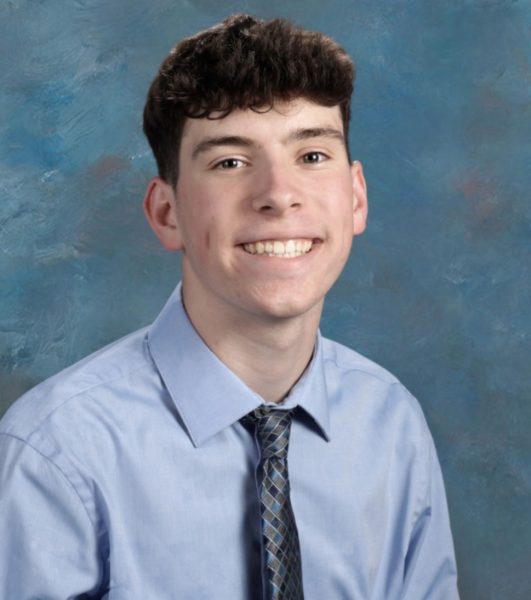
Q30 television has provided opportunities for countless students over the course of its lengthy 30-year history. Whether you’re an aspiring producer or want to cover a sports team, Q30 is the ultimate land of opportunity — especially for 2020 and 2021 graduate Jonathan Banks.
Banks spent all four years of his Bobcat tenure in Q30, serving as an executive producer for Bobcat Breakdown while also beat reporting for the men’s soccer and men’s ice hockey teams. He currently serves as an associate producer at ESPN, where he’s built his young career over the past five years.
Banks has credited a lot of his career success thus far to his time covering Quinnipiac’s men’s ice hockey team, where he gained unforgettable experience and learned the true professional standard of the sports industry.
“I really think it just gives you the sense of like, this is as professional an environment as you can get at that age and in that moment,” Banks said.
Being able to go to Quinnipiac sporting events and creating content on different teams has been a privilege for Banks, and there’s no doubt that the opportunity Q30 offered him has created a successful post-college career so far.
“Right now I produce hockey on ESPN, and without that experience of doing it, as an on-air talent in college, helped me tremendously… now when I’m talking to the guys that are the former NHL players that are on-air and whatnot, I can’t relate to their experience, but I can relate to what it’s like being in the media these days and turning around quick stories.”
While Q30 offers great opportunities to all of its members across all departments, the real growth in its members comes from the peer support and collaboration throughout the organization. A massive part of the success of Q30 is due to the leadership skills of older students.
Even as a freshman, the then-upper-classmen that Banks worked with set great standards and expectations to get the most out of him. While their leadership took some getting used to, there’s no doubt that it has left a lasting impact on his work ethic and how he goes about his current work.
When the men’s hockey team had a live scrimmage, the graduate students on the staff with Banks brought him up to the then TD Bank Sports Center and had him go inside and practice his standups by himself.
“This is one of the biggest moments that stuck with me… I was there for maybe 45 minutes to an hour, because I couldn’t get it. When I finished it, MJ [Baird] was waiting in his car the entire time. It was more of a test and anything like ‘Hey, you’re gonna figure this out on your own, no matter how long it takes.’”
Though it may have been a tough skill to learn overall, the leadership and teaching style that Bank’s peers had made a lasting impact on him.
As both a producer and beat reporter, Q30 has created a standard and environment that Banks has acknowledged and carried into his professional career. He understands and even enjoys the fact that with the great opportunities Q30 offers, he was competing against his peers, which is one of the realities of working in the sports world.
“In the real world where you’re trying to get a story out first, you’re trying to do it better than people that you consider friends or even the guy you’re sleeping next to. You guys are at the same media day, writing the same game recap and whatnot.”
Throughout his tenure with Q30, Banks learned valuable lessons combined with unparalleled experience with live coverage of athletic events, along with helping put together shows and creating graphics, while also setting a standard within the organization.
These skills and opportunities offered by Q30 are one of a kind, and Banks has credited a large piece of his career success to what the organization did for him and what it made him both as a producer and as a person.